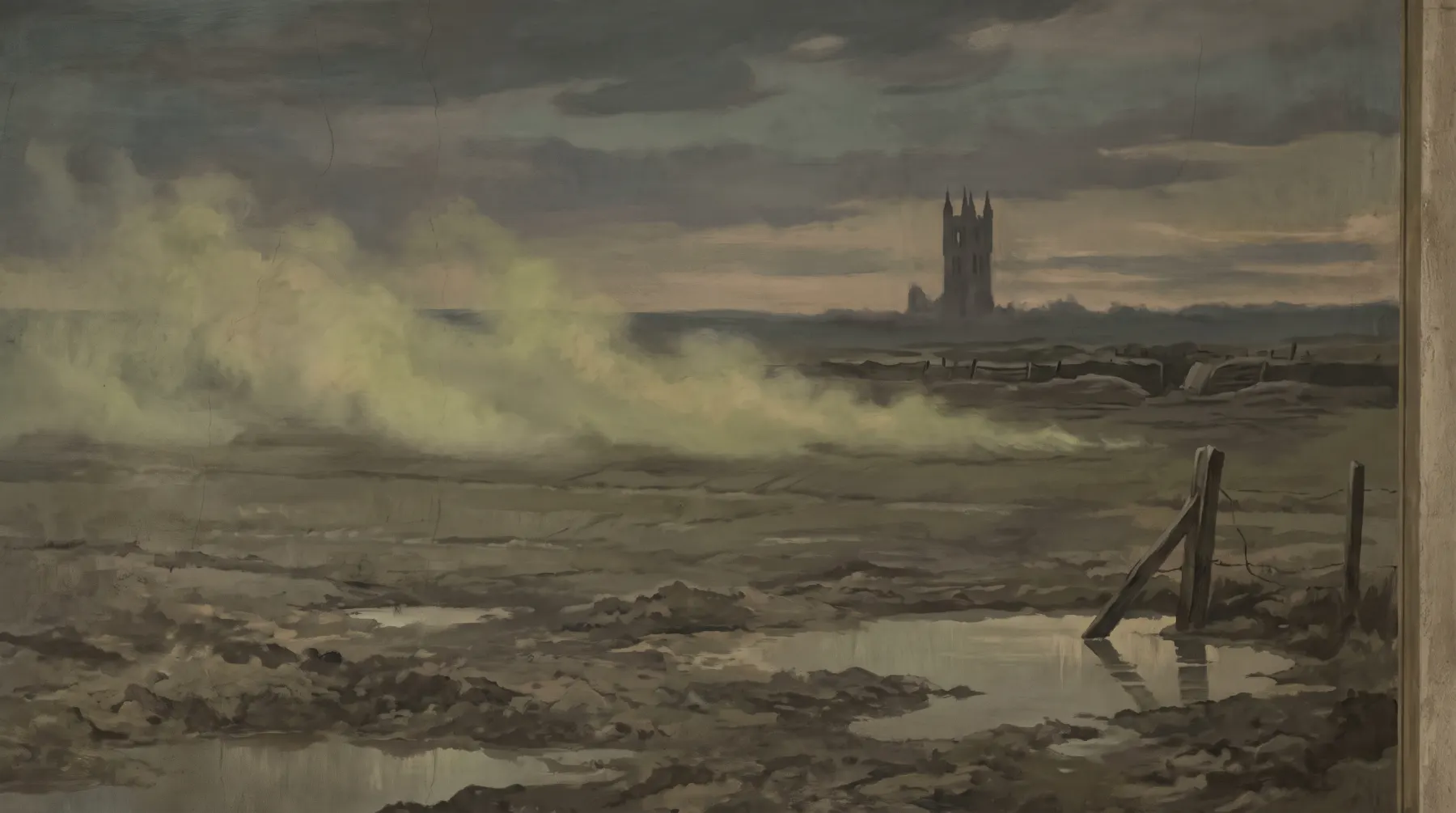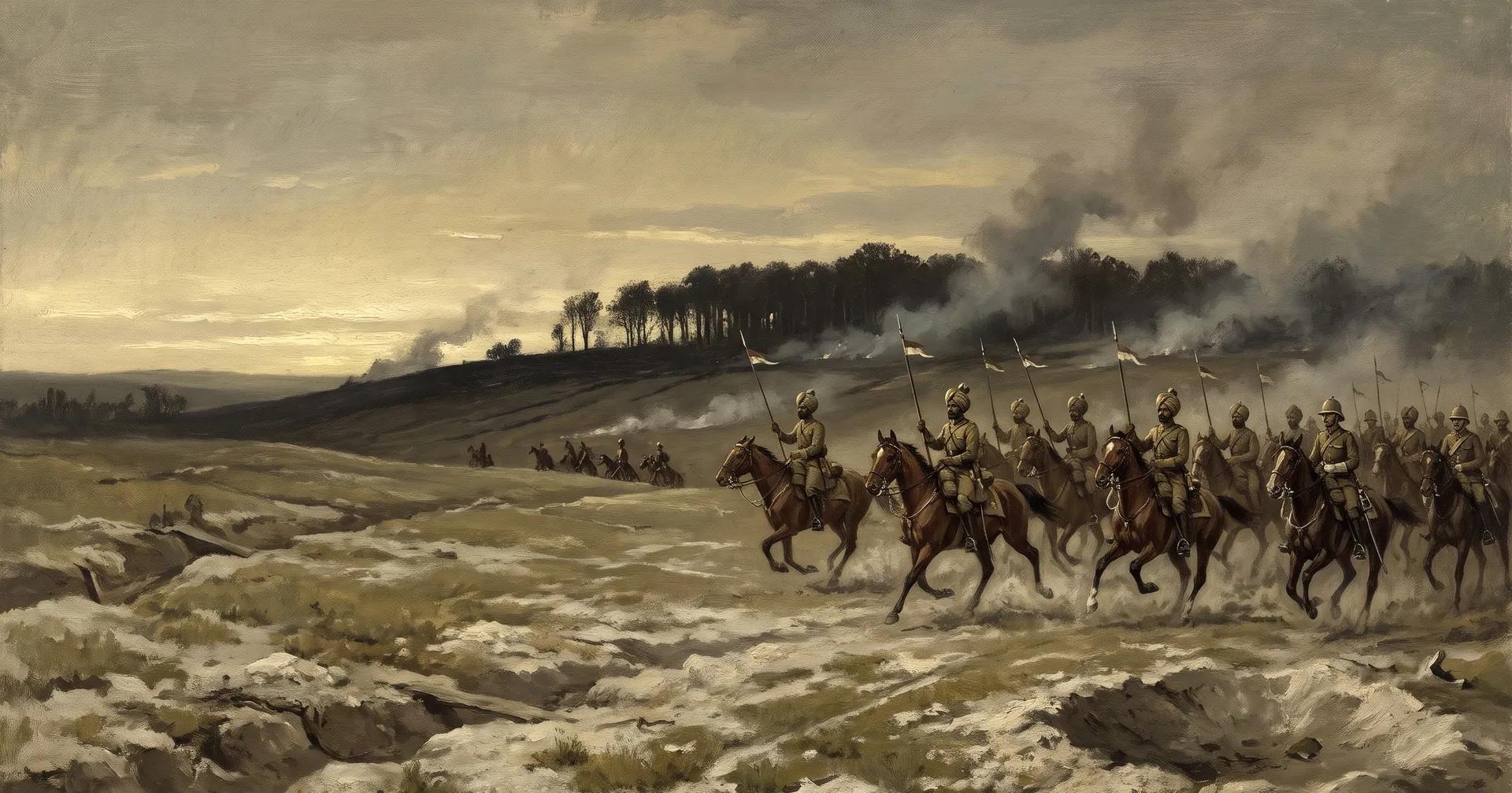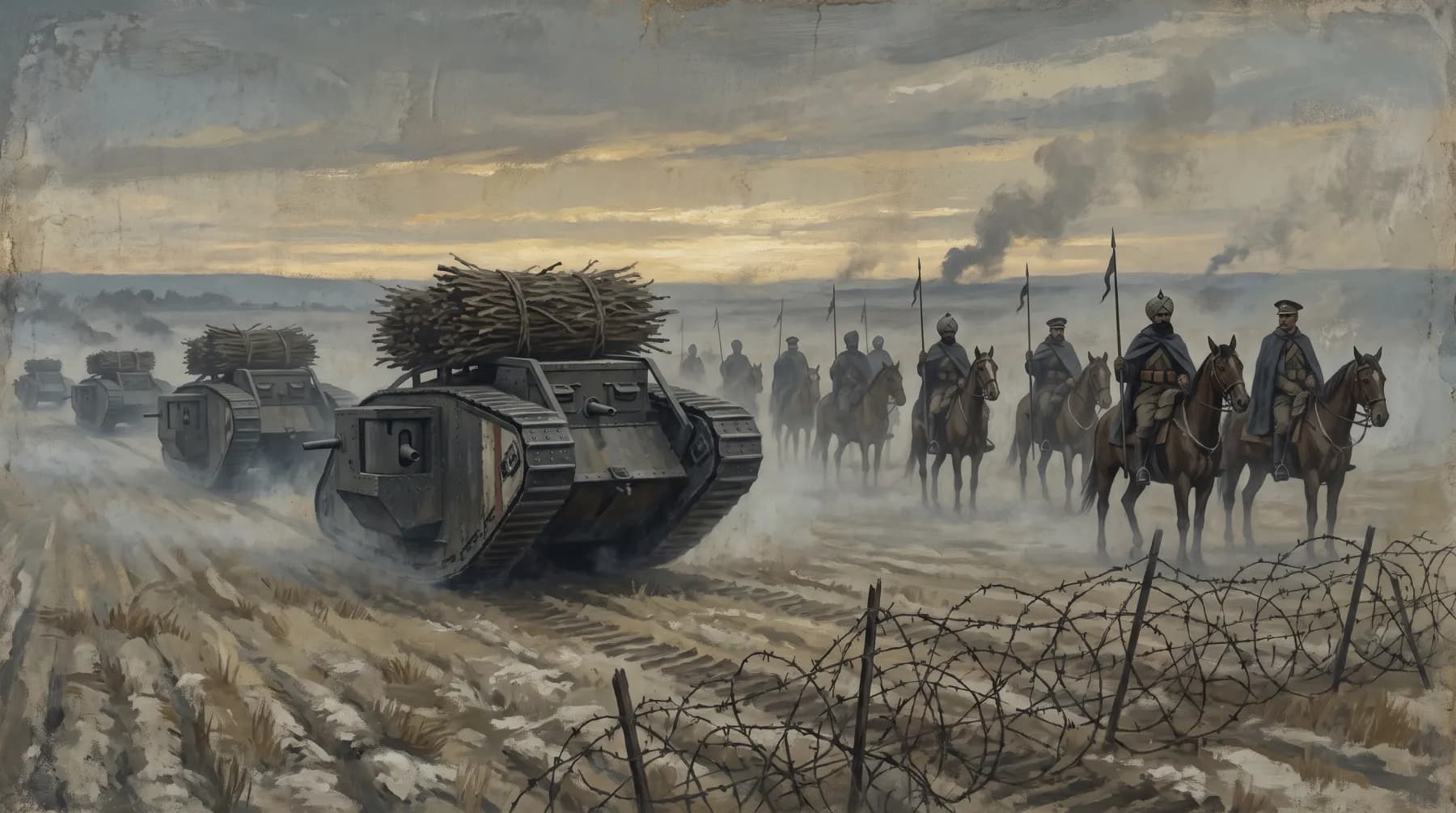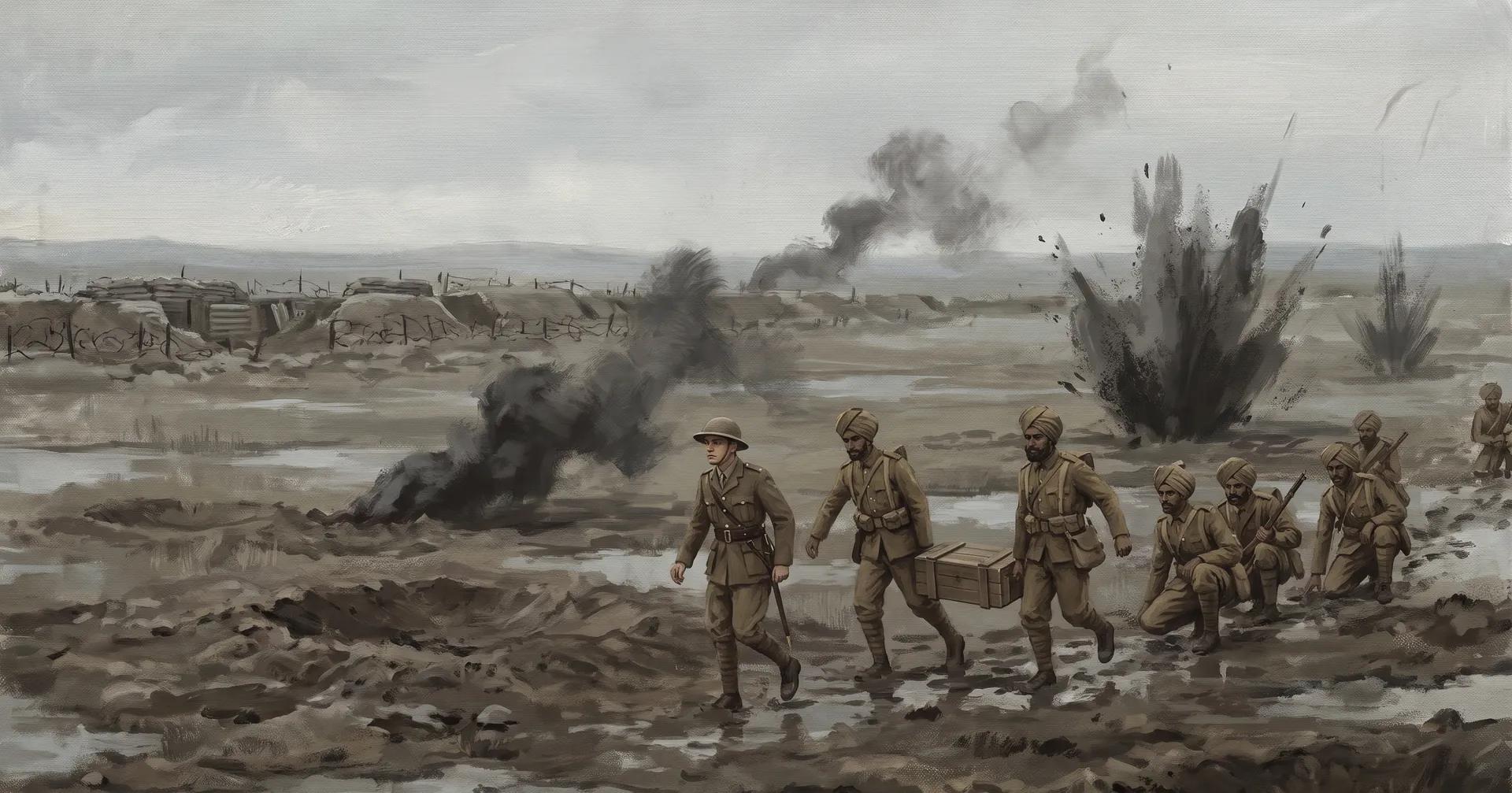
Painted reconstruction of a small party of Sikh soldiers led by a young British officer crossing open, flooded, shell-pocked ground toward a low breastwork, two of them carrying a wooden ammunition box between them as shells burst nearby.

15–25 May 1915

The Battle of Festubert

Indian, Canadian and British soldiers in one offensive, May 1915

An offensive in which Indian, British and Canadian forces fought side by side, one of the earliest examples of attrition warfare on the Western Front. The Indian Corps led the first assault and held a captured trench the troops called the Glory Hole; the 1st Canadian Division took the Orchard in the deepest Allied advance; the gain, after ten days, was about 600 yards.

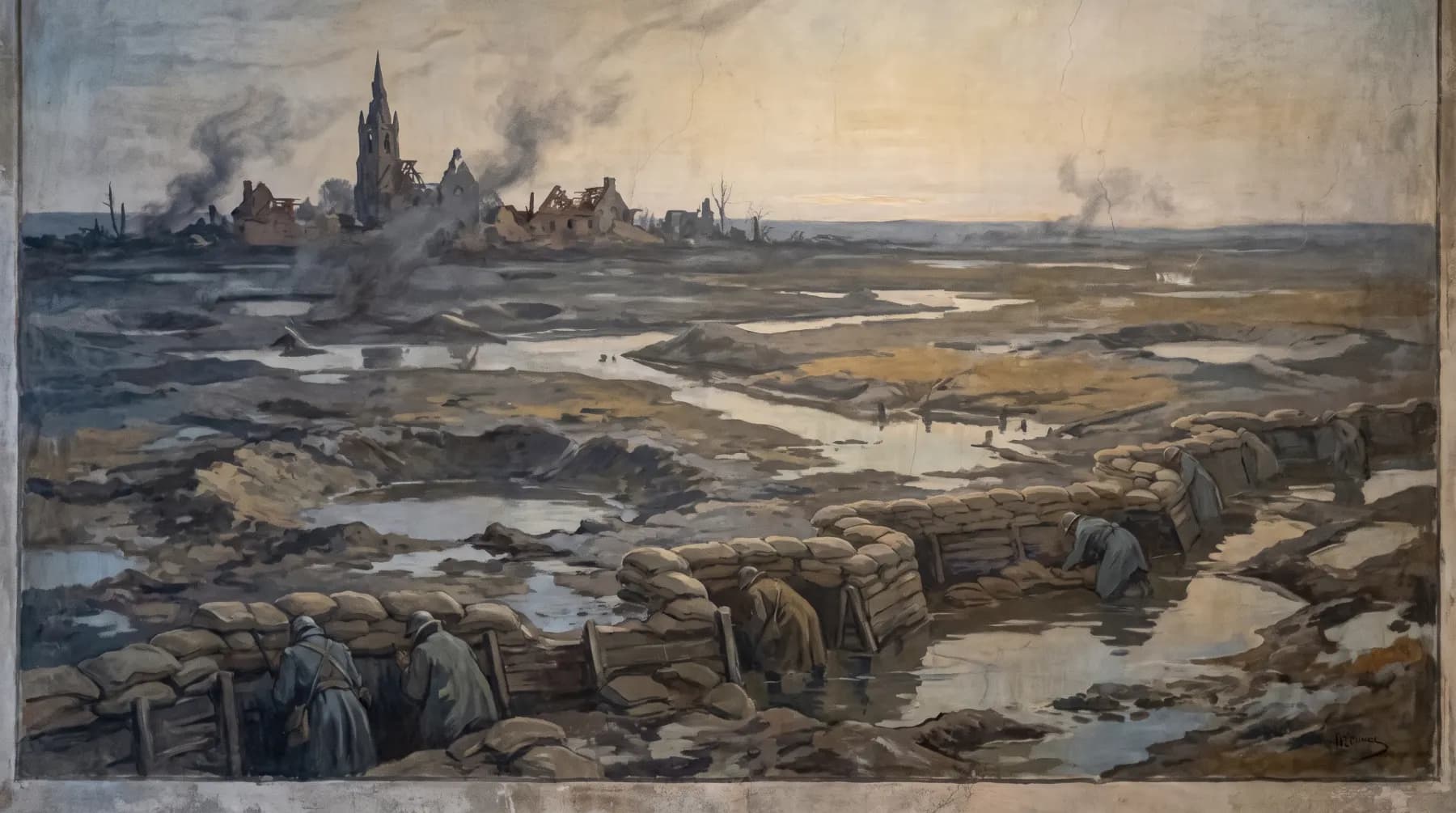
Artistic historical reconstruction

Dates
15–25 May 1915
Where
Festubert, northern France
Indian formation
Indian Corps (Meerut and Lahore Divisions)
Canadian formation
1st Canadian Division
Ground gained
About 600 yards
Victoria Cross
Lieutenant John Smyth, 15th Ludhiana Sikhs

Why this battle is here

Festubert is one of the earliest battles where Indian, Canadian and British troops fought shoulder to shoulder in a coordinated offensive — and the one where a British officer wrote afterwards that the Sikhs beside him never got the credit they deserved.

01 — OVERVIEW

Ten days for six hundred yards

What Festubert was, where it sat in the spring of 1915, and why it belongs here.

The Battle of Festubert, 15–25 May 1915, was an offensive in northern France involving Indian, British and Canadian forces fighting side by side. It followed the failure at Aubers Ridge and the crisis at Second Ypres, and formed part of a wider Allied plan to press the German lines while the German army was heavily engaged on the Eastern Front.

It became one of the earliest examples of attrition warfare on the Western Front: long bombardments, repeated infantry assaults, and extremely high casualties for limited gains.

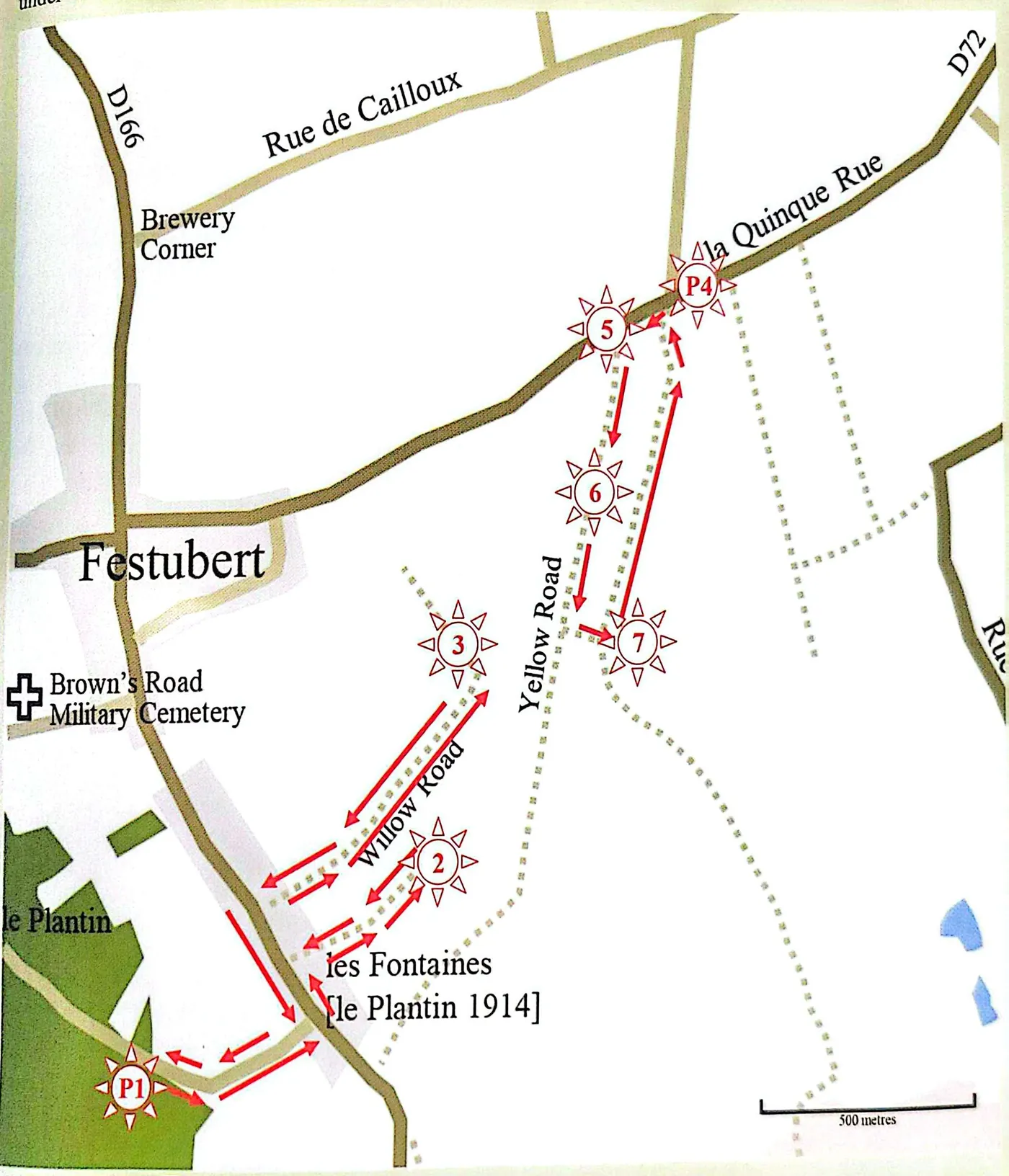
Contemporary printed map of the Festubert front showing the line from which the Second Division attacked on 15 May 1915, the Meerut Division and Indian Corps area of attack, Rue du Bois, La Quinque Rue and the Ferme Cour d'Avoué.
The front at Festubert: the line from which the British 2nd Division attacked at 11.30 p.m. on 15 May, with the Indian Corps' area of attack on its left and the 7th Division on its right.Historical image · provenance and reproduction rights to be confirmed

02 — THE GROUND

Flat, wet and badly mapped

The strongpoints, the terrain, and the plan that depended on a bombardment that did not do its work.

Festubert lay in a flat, waterlogged region where trenches could not be dug deep and defences were built upward as breastworks. The ground between the lines was cut by water-filled ditches, the German wire was largely uncut, and errors in the trench maps ran to as much as 450 yards — all of which made coordinated attacks extremely difficult.

Key tactical points

  • La Quinque Rue — a major road and the German defensive anchor
  • The Northern Breastwork — a fortified German trench system
  • Ferme du Bois — a strongpoint attacked by Indian units
  • Ferme Cour d'Avoué — objective of the British Guards, with Canadian support
  • The Orchard, later the “Canadian Orchard” — captured by the 16th Battalion (Canadian Scottish)
  • K.5 — a heavily defended German trench attacked repeatedly by Canadians
  • The “Glory Hole” — a deadly captured trench held by the 15th Ludhiana Sikhs
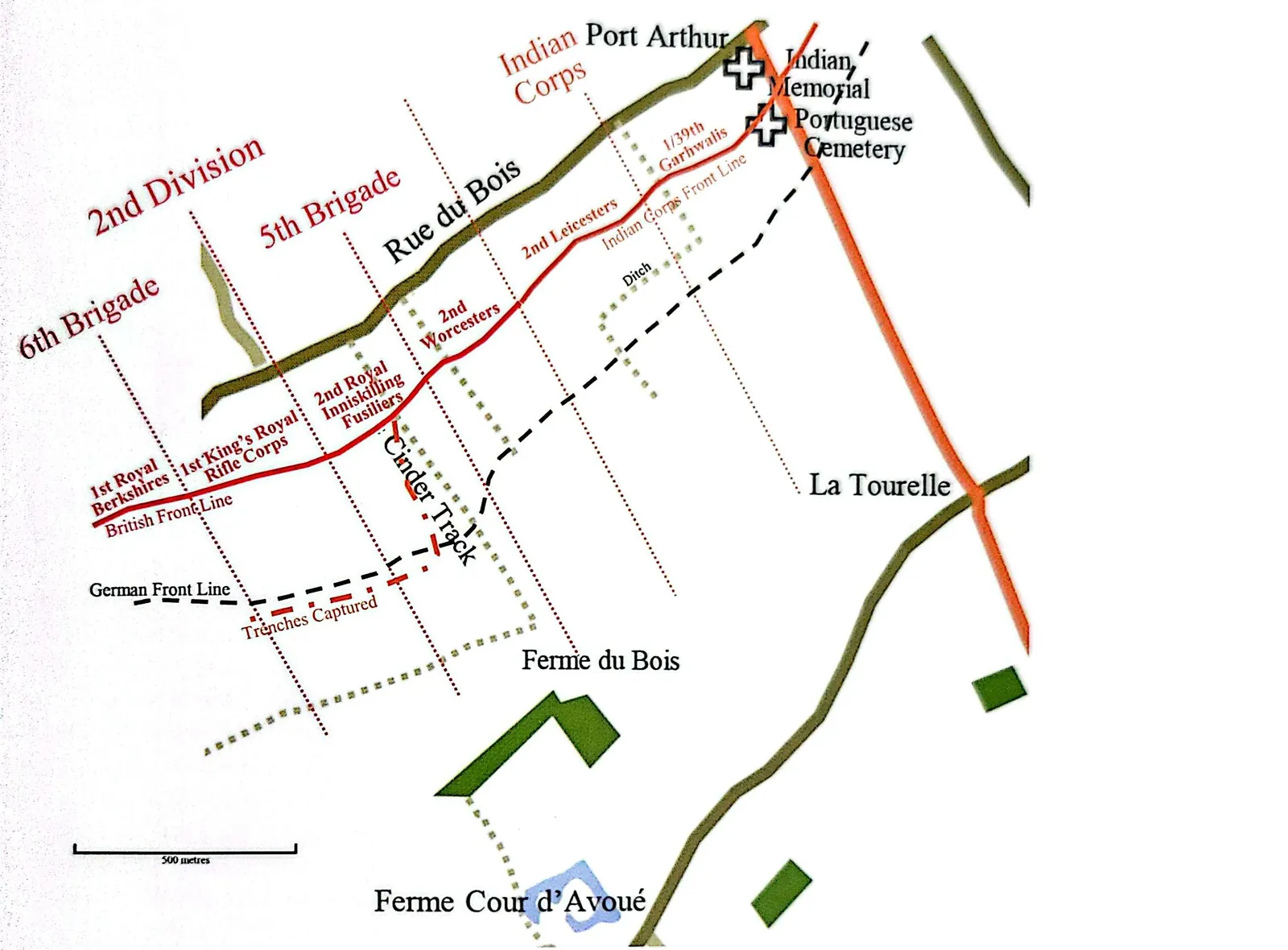
Sketch map of the Festubert night attack of 15 May 1915 showing the British front line held by the 6th and 5th Brigades of the 2nd Division and the 1/39th Garhwalis and 2nd Leicesters of the Indian Corps, with the German front line, trenches captured, Ferme du Bois and Ferme Cour d'Avoué.
The night attack of 15 May 1915: the 2nd Division's brigades on the left, the Indian Corps' front line on the right, and the trenches captured.Historical image · provenance and reproduction rights to be confirmed

The plan

The British First Army under General Sir Douglas Haig aimed to break through three German trench lines, capture the fortified farms and strongpoints, and support the French offensive in Artois while German attention was on the Russian front.

The plan rested on a sixty-hour artillery bombardment. Many of the shells were shrapnel rather than high explosive, a high proportion failed to explode, the wire was left uncut, and the German batteries were all still in action when the infantry went forward.

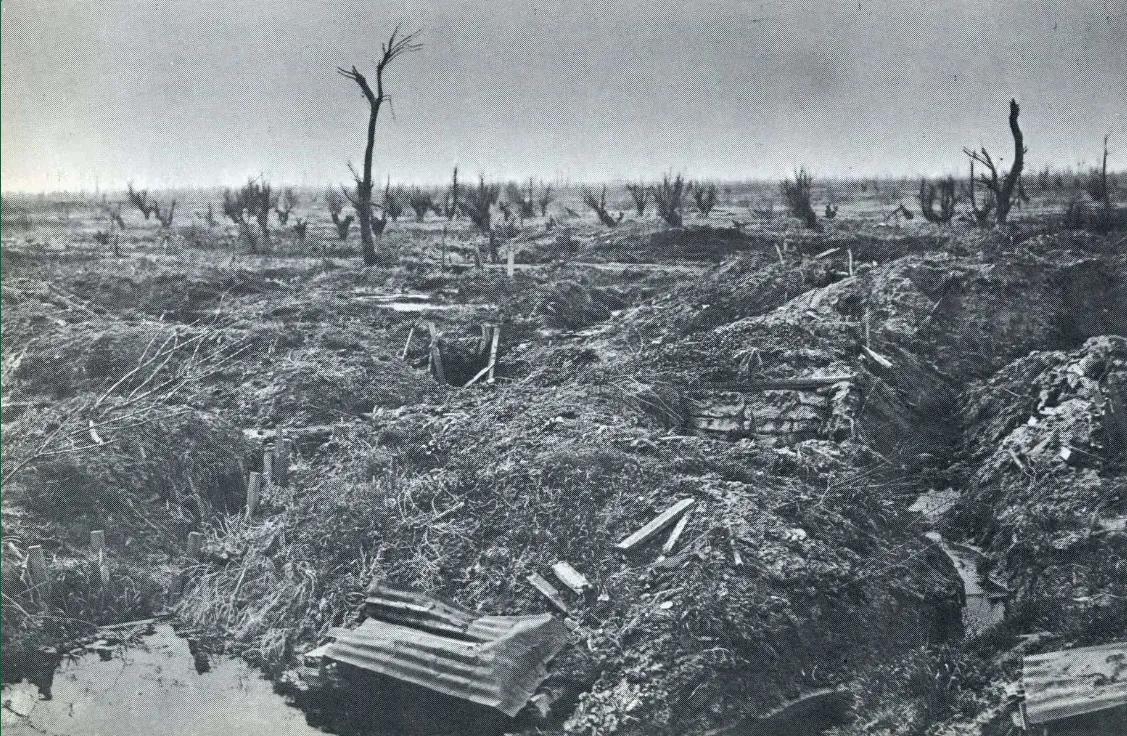
Shattered, waterlogged ground with broken trees, collapsed breastworks and sheets of corrugated iron lying in flooded trenches.
Flooded trenches and shattered ground in the Orchard sector, Festubert. From the memorial project's research collection.Historical image · provenance and reproduction rights to be confirmed

03 — INDIAN CORPS

The Indian Corps and the Glory Hole

The left wing of the assault, and the afternoon of 18 May when ten Sikh volunteers and a lieutenant ran 250 yards under fire.

The Indian Corps, under Lieutenant-General Sir James Willcocks, formed the left assault wing of the offensive and later reinforced the most exposed of the captured positions.

Indian formations engaged

  • Meerut Division — the main assault on 15–16 May
  • Garhwal Brigade — heavy losses in No Man's Land
  • 2nd Leicesters and 3rd Londons — British battalions attached to the Indian Corps
  • 2/3rd Gurkha Rifles — led the attack of 16 May
  • Sirhind Brigade — planned attack at Ferme du Bois
  • Lahore Division — artillery and trench-holding support
  • 15th Ludhiana Sikhs — the defence of the Glory Hole
  • 1/1st and 1/4th Gurkha Rifles — the assault of 22–23 May
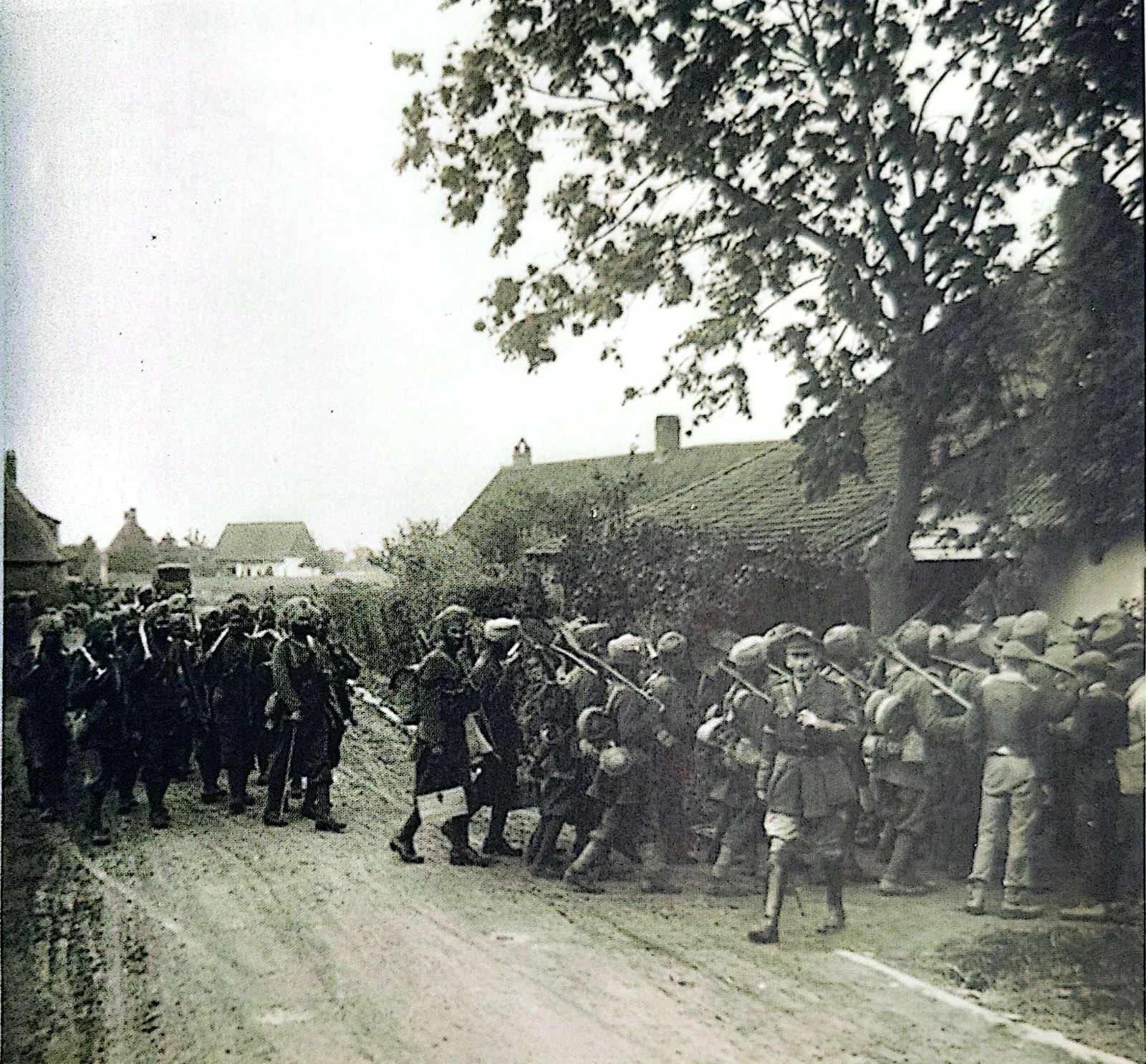
A long column of Sikh soldiers in turbans with rifles slung marching along a village road past farm buildings and a large tree, a British officer walking beside them.
A company of the 15th Sikhs returning to billets at Le Sart.Historical image · provenance and reproduction rights to be confirmed

18 May: the Glory Hole

On 18 May 1915 the Indian Corps was holding a dangerously exposed section of captured German trench known as the Glory Hole. The Germans kept up continuous bombing attacks with grenades, and by early afternoon the Sikhs holding the forward company were running out of bombs. Bomb-carrying parties sent forward were all killed or wounded before reaching halfway. The position was on the point of being overrun.

At 3.30 p.m. Lieutenant John G. Smyth of the 15th Ludhiana Sikhs received a direct order.

“…to take a bombing party and two boxes of bombs from the old front line to the captured trench – a distance of 250 yards over open ground.”
The order to Lieutenant J. G. Smyth, 18 May 1915Lieutenant Smyth's own account, as quoted in the memorial project's research

The ground between the trenches was swept by machine guns, rifles and shrapnel, and strewn with the dead of earlier attempts. Smyth asked for volunteers. Many stepped forward; he chose ten men of the 15th Ludhiana Sikhs.

The party set off carrying the two heavy boxes of bombs. For the first fifty yards a trench gave some cover; once they emerged, shrapnel found them and the first man was hit. As they went on, more were killed and wounded. They struggled for cover among the dead and the wreckage of trenches as the German guns and machine guns intensified. By the time Smyth reached a shell hole thirty yards from the objective, only one man was still with him — Sepoy Lal Singh — and they had one box of bombs left.

Under covering fire from the forward company, Smyth and Lal Singh made the final dash and delivered the bombs, and the Sikhs could fight on. German bombers came down the trench again at once, but with the fresh supply of grenades the position held until nightfall. In that final action Sepoy Lal Singh was shot through the head and killed, moments after the mission was complete.

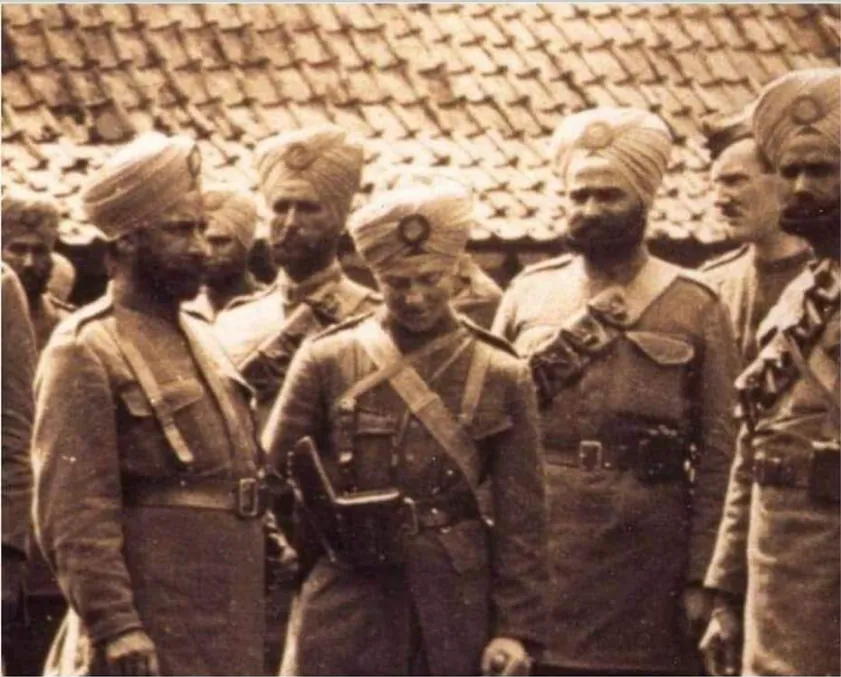
A young British officer wearing a turban stands among Sikh soldiers of the 15th Ludhiana Sikhs in front of a tiled farm roof.
“Jackie” Smyth VC in his turban with men of the 15th Ludhiana Sikhs (today 2 Sikh).Historical image · provenance and reproduction rights to be confirmed
“I have always felt that the Sikhs with me did not get sufficient credit.”
John Smyth, in his memoirsQuoted in the memorial project's research

Why this action was extraordinary

  • It was carried out in daylight, under direct observation
  • The ground was completely exposed
  • The mission was essential to prevent the forward trench from collapsing
  • Smyth's party suffered 90 per cent casualties
  • The bombs delivered saved the position and prevented a German breakthrough
  • It remains one of the most dramatic small-unit actions of the Indian Corps on the Western Front
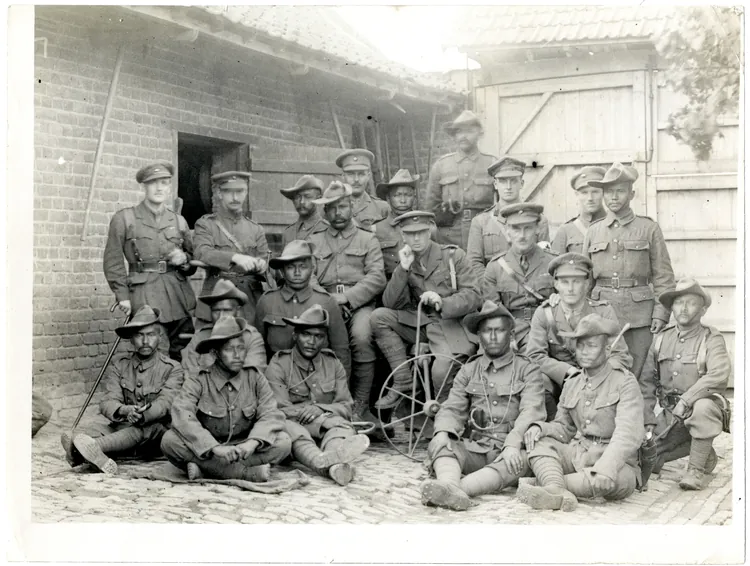
A group photograph of British and Gurkha officers of the 1/4th Gurkha Rifles in front of a brick farm building, some seated on cobbles beside a cart wheel.
British and Indian officers of the 1/4th Gurkhas, who attacked at Festubert on 22–23 May.Historical image · provenance and reproduction rights to be confirmed
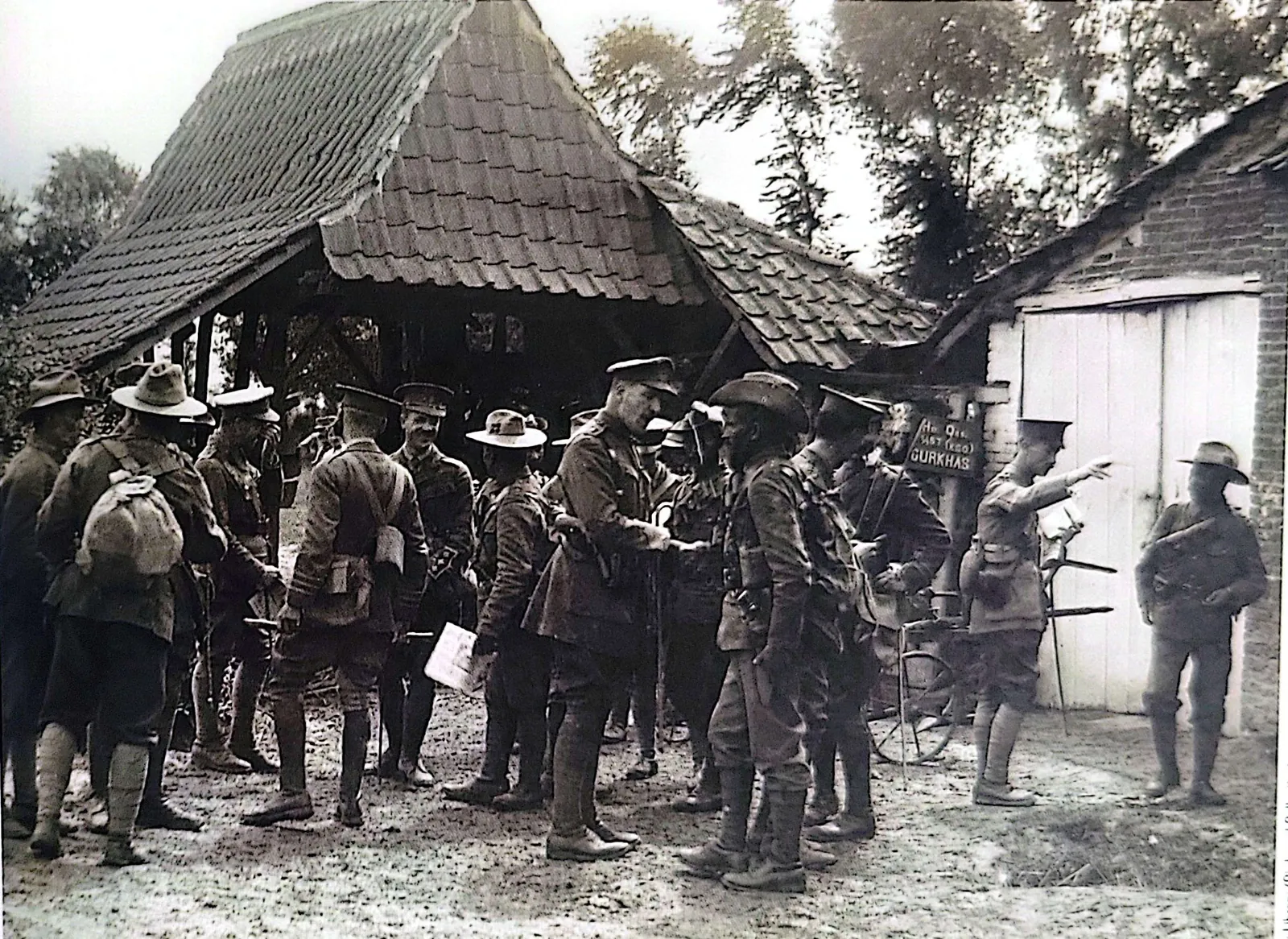
Gurkha soldiers in slouch hats talking with British staff officers outside a tiled farm building marked as a Gurkha battalion headquarters.
Gurkha soldiers and British officers at a Gurkha battalion headquarters, 1915. From the memorial project's research collection.Historical image · provenance and reproduction rights to be confirmed

04 — CANADIANS

The 1st Canadian Division enters

Alderson's Force, the Orchard, the North Breastwork and K.5.

The 1st Canadian Division, under Major-General Edwin Alderson, entered the battle on 18 May, relieving exhausted British units and forming “Alderson's Force”. Its brigades were commanded by Brigadier-General R. E. W. Turner, VC (3rd Brigade) and Brigadier-General Arthur Currie (2nd Brigade).

Key Canadian actions

  • 3rd Brigade — attacked the Orchard and the Northern Breastwork
  • 16th Battalion (Canadian Scottish) — captured the “Canadian Orchard”, the deepest Allied advance of the battle
  • 15th Battalion (48th Highlanders) — heavy losses at the North Breastwork
  • 2nd Brigade — repeated assaults on K.5
  • 7th Battalion (1st British Columbia) — successful attack on K.5 on 24 May
  • Canadian Cavalry Brigade (Seely's Detachment) — dismounted attack with gas bombs on 25 May, in support of the Canadian and Highland Divisions
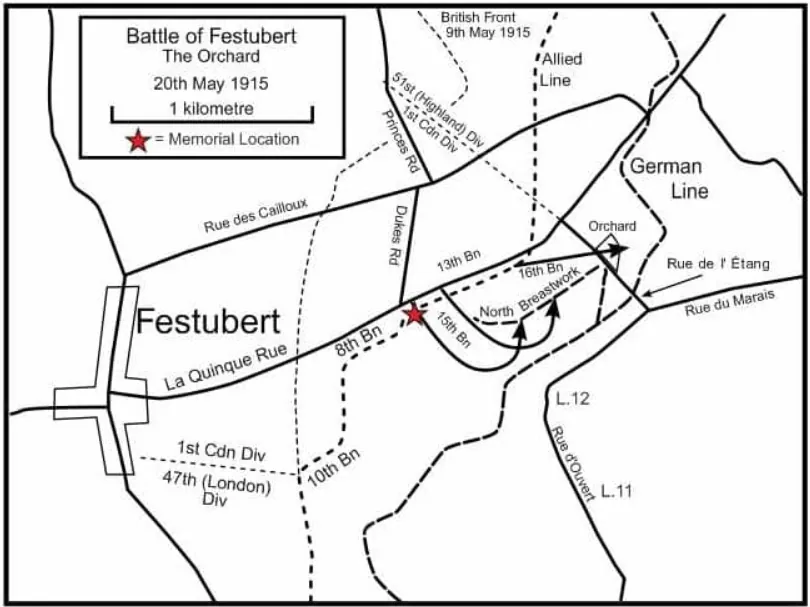
Sketch map titled Battle of Festubert, The Orchard, 20th May 1915, showing Festubert village, La Quinque Rue, the 1st Canadian Division's battalions, the North Breastwork and the Orchard, with a star marking the memorial location.
The Orchard, 20 May 1915: the 16th and 15th Battalions' attacks on the North Breastwork and the Orchard, with the site of the Canadian memorial marked.Historical image · provenance and reproduction rights to be confirmed
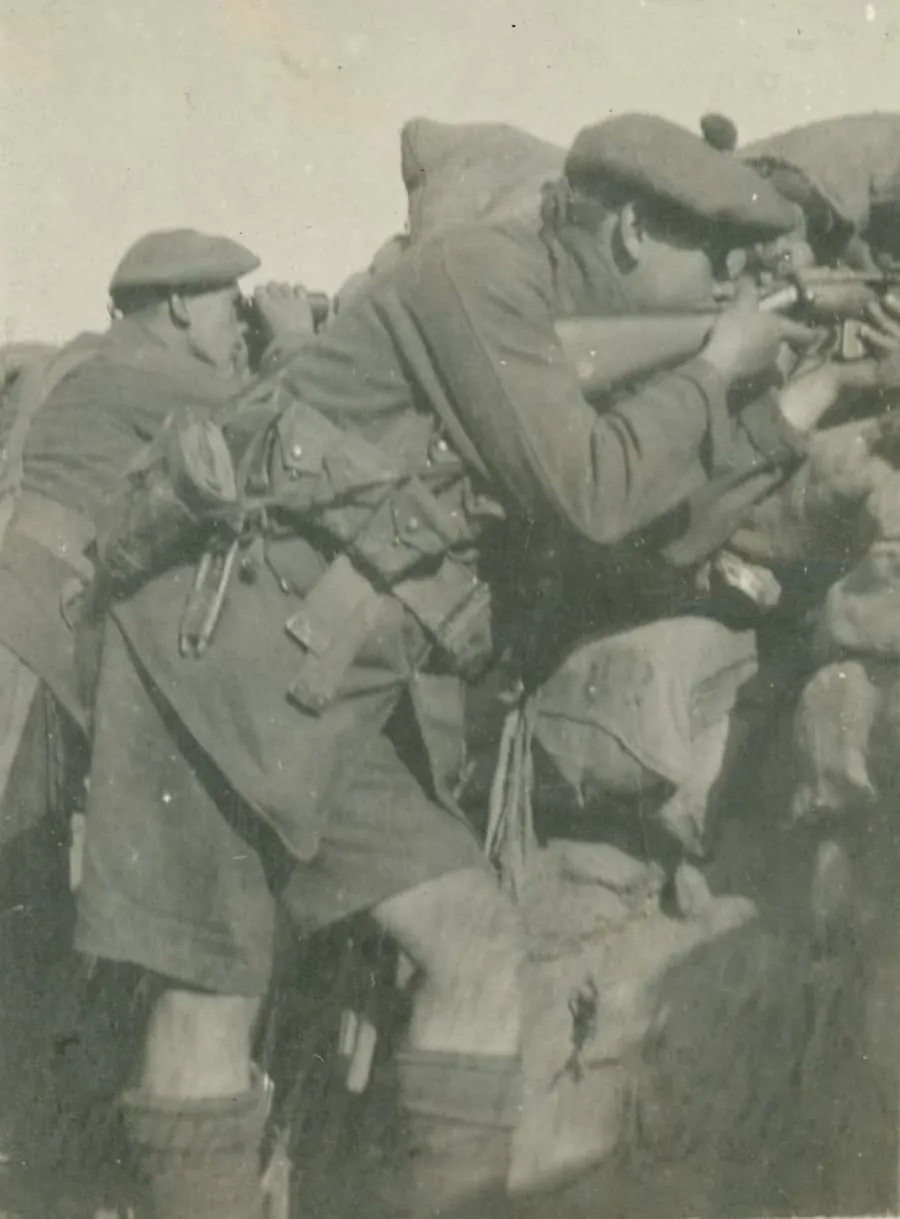
A kilted soldier in a Balmoral bonnet fires his rifle over a sandbag breastwork while a second soldier beside him watches through binoculars.
A Highland soldier firing over a breastwork, 1915. From the memorial project's research collection; the unit is not identified.Historical image · provenance and reproduction rights to be confirmed

The British divisions

The British bore the brunt of the early assaults and suffered extremely heavy casualties in the first forty-eight hours. The 2nd Division made the main assault of 15–16 May, its 6th and 5th Brigades leading the night attack; the 4th (Guards) Brigade attacked near Ferme Cour d'Avoué; the 7th Division attacked at dawn on 16 May; the 47th (London) Division made the major assault of 25 May; and the 51st (Highland) Division supported the Canadians.

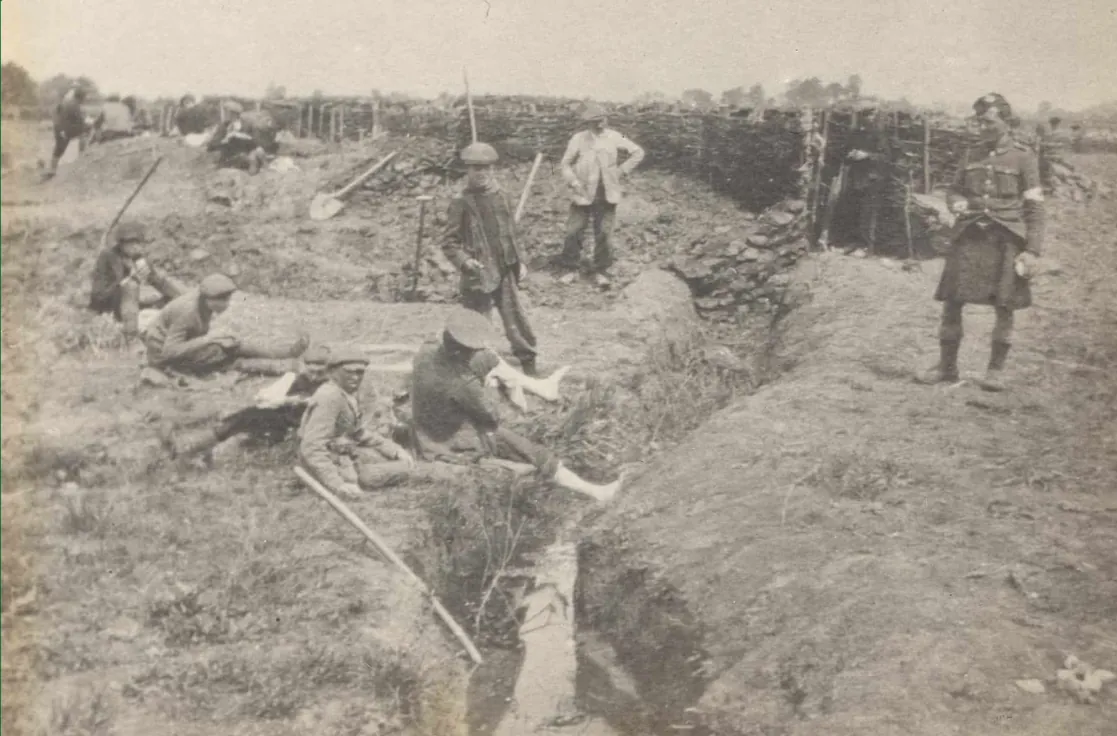
Soldiers resting in a shallow reserve trench behind a wattle and earth breastwork, one standing and watching the line.
Troops in a reserve position in the Festubert sector. From the memorial project's research collection.Historical image · provenance and reproduction rights to be confirmed

05 — WHAT HAPPENED

Ten days, day by day

The course of the battle from the failed bombardment to the last Canadian assaults.

Sequence of events

  1. 12–15 May

    The bombardment

    Sixty hours of shelling fails to cut the German wire.

  2. Night of 15 May

    The Meerut Division attacks

    The Indian Corps' assault is pinned down by machine guns; the 2nd Division's night attack goes in on its right at 11.30 p.m.

  3. 16 May

    Renewed Indian assault

    The 2/3rd Gurkha Rifles lead; Gurkha platoons are cut down crossing the open.

  4. 17–18 May

    The Glory Hole

    The Indian Corps reinforces the captured trenches. On 18 May, Smyth's bombing party reaches the Glory Hole.

  5. 18–22 May

    The Canadians enter

    The 1st Canadian Division relieves exhausted British units; attacks on the Orchard, the North Breastwork and K.5.

  6. 22–23 May

    Indian and Canadian attacks together

    Coordinated assaults; the 1/1st and 1/4th Gurkhas capture the German front trench but withdraw.

  7. 24–25 May

    Final Canadian assaults

    The 7th Battalion takes K.5 on 24 May; on 25 May the Canadian Cavalry Brigade attacks dismounted with gas bombs.

  8. 25 May

    The battle ends

    The offensive is closed down with about 600 yards gained.

Operational commanders

  • General Sir Douglas Haig — Commander, British First Army
  • Lieutenant-General Sir James Willcocks — Commander, Indian Corps
  • Major-General Edwin Alderson — Commander, 1st Canadian Division
  • Brigadier-General R. E. W. Turner, VC — Commander, 3rd Canadian Brigade
  • Brigadier-General Arthur Currie — Commander, 2nd Canadian Brigade

06 — HONOURS

Awards and honours

The decorations the project's research records for Festubert, Indian and Canadian.

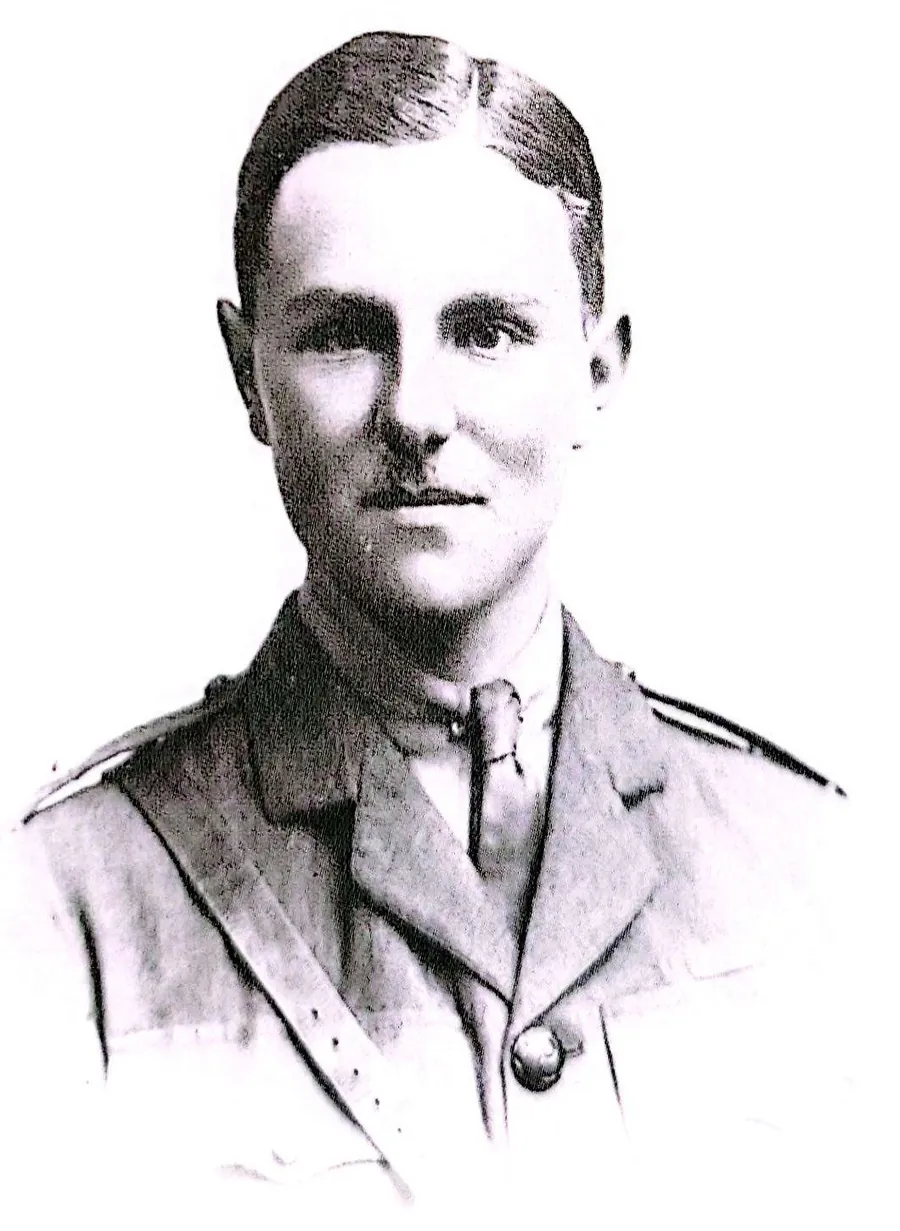
Studio portrait of Lieutenant J. G. Smyth in 1915, a young officer in uniform with a Sam Browne belt.
Lieutenant J. G. Smyth VC, 15th Ludhiana Sikhs, 1915.Historical image · provenance and reproduction rights to be confirmed

Indian Corps

Lieutenant John George Smyth

15th Ludhiana Sikhs

Victoria Cross18 May 1915, the Glory Hole

Led a party of ten Sikh volunteers carrying two boxes of bombs 250 yards over open ground under machine-gun, rifle and shrapnel fire to the captured trench, reaching it with one man, Sepoy Lal Singh, and one box of bombs — enough to hold the position until nightfall.
Sepoy Lal Singh

15th Ludhiana Sikhs

Killed in action18 May 1915, the Glory Hole

The last man standing of Smyth's bombing party. Made the final dash with the surviving box of bombs and was shot through the head and killed moments after the mission was complete.

Lance Naik Mangal Singh

15th Ludhiana Sikhs

Indian Order of Merit

Recorded in the project's research among the awards for Festubert.

Sapper Jiwa Khan

1st Sappers and Miners

Indian Order of Merit

Recorded in the project's research among the awards for Festubert.

Nine men of Smyth's bombing party

15th Sikhs, 19th Punjabis and 45th Sikhs

Indian Distinguished Service Medal18 May 1915

The research records the Indian Distinguished Service Medal for nine members of the bombing party, drawn from the 15th Sikhs, 19th Punjabis and 45th Sikhs.

Canadian — Distinguished Service Order

Captain Stanley John Anderson

5th Battalion

Distinguished Service Order20–24 May 1915

Severely wounded on 20 May, he refused to be evacuated until his tour of duty was complete. He returned to the line on 24 May, suffered a second head injury, and stayed a further day and night to lead his men in a renewed assault.

Captain Frank Morrison

16th Battalion (Canadian Scottish)

Distinguished Service Order20 May 1915, the Orchard

Commanded a daytime assault directly into the Orchard under intense machine-gun and artillery fire; his tactical skill and bravery enabled his company to capture and hold the position.

Captain John Nash

5th Battalion (Western Cavalry)

Distinguished Service Order22–24 May 1915

Repeatedly exposed himself to intense shellfire to repair severed telephone lines, keeping communications open between the forward companies and brigade headquarters through the most chaotic phase of the Canadian assault.

Captain Stanley Smith

Canadian Field Ambulance

Distinguished Service Order

Led an eight-man rescue party into the bullet-swept Orchard to retrieve wounded soldiers. Every casualty was evacuated, though four of the rescuers were hit.

Canadian — Military Cross, DCM and Military Medal

Lieutenant Donald McDonald

Lord Strathcona's Horse, attached infantry

Military Cross

Wounded three separate times during the assault, he refused evacuation and continued leading his men until their objective was secured.

Lieutenant William Disraeli Spinks

2nd Canadian Infantry Brigade

Military CrossMay 1915

Commanded a grenade company clearing fortified German positions. Under relentless bombardment his leadership enabled his men to hold their position for twenty continuous hours.

Company Sergeant-Major Herbert William Hives

10th Battalion

Distinguished Conduct Medal22 May 1915

Wounded in the leg while holding a shattered trench line against a heavy German counter-attack.

Private Francis Pegahmagabow

1st Battalion

Military Medal

confirmed 1916; the citation covers Ypres, Festubert and Givenchy

An Ojibwe sniper and front-line runner whose Military Medal citation refers to his bravery carrying messages through heavy fire at Ypres, Festubert and Givenchy. He later became Canada's most decorated Indigenous soldier of the First World War.

Battle honour “FESTUBERT, 1915”

  • The Royal Canadian Regiment
  • Princess Patricia's Canadian Light Infantry
  • The Canadian Scottish Regiment
  • The Calgary Highlanders
  • The Royal Winnipeg Rifles
  • The Black Watch (Royal Highland Regiment) of Canada
  • 48th Highlanders of Canada
  • The Queen's Own Rifles of Canada
  • The Royal Montreal Regiment
  • and others

07 — THE COST

The cost

What ten days at Festubert cost the three armies, as the project's research records it.

British Empire casualties, 15–25 May 1915

ForceCasualties
British divisionsAbout 12,000
1st Canadian Division2,204
Indian Corps93 killed; 1,367 wounded or missing
TotalAbout 16,500

Figures as given in the project's research. The attacking troops largely failed to reach their objectives and suffered severe casualties; the ground gained was about 600 yards.

08 — VOICES

Letters home

Canadian soldiers writing home in the days after the battle, as collected in the project's research.

The project's research gathered letters written home by Canadian soldiers in the weeks after Festubert, as reproduced by the Canadian History Ehx project from newspapers and local histories of the time. They are given here as the research gives them.

“Our line had advanced and we had nothing to bother us except the occasional shell. It was in this spot we were caught when advancing to age a flank attack. The Germans saw us advancing into the trench and shelled us. Parapets, sandbags, the result of a big shell. We managed to get them out. I hear a new draft of Camerons is coming. I guess we will need almost the whole of them to make up our company. The boys are not lacking in spirit and sang nearly all the way back from the trenches last night.”
Private James Lovett, letter home, 27 May 1915Canadian History Ehx, via the memorial project's research
“I have had some exciting times since I last wrote you, a bayonet charge being the most stirring. We captured a trench from the Germans but they unfortunately could not pluck up enough nerve to wait for us… They made a couple of very vicious counter attacks the next day, but we managed to keep them out with heavy loss to themselves. Fortunately, I came through the whole thing without a scratch, though the reaction afterwards left me with nerves somewhat shaken.”
Private A. P. Glasgow, letter home, 1915Canadian History Ehx, via the memorial project's research
“A shell hit the bank immediately above my head and two of us were absolutely covered with sand and clay… When it all stopped, I shook myself and took a look around. My haversack was riddled and there was a great piece of shell imbedded in my tin of bully beef. My emergency ration of biscuits was all broken up into crumbs. A cartridge pouch was completely shot off my belt and not a round in it exploded. Two of our boys were wounded. I had a piece of shrapnel in the fleshy part of my thigh.”
Trooper T. L. Golden, Lord Strathcona's Horse, letter home, 1915Canadian History Ehx, via the memorial project's research
“You hear it coming as a dull moan, then it gradually develops into a weird whistle, then a shriek and the earth rocks under you. You are covered with mud and earth and you are glad you are alive. Simultaneously with the bursting of a shell come the cries and moans of the wounded. When you are exposed to this for quite a while, it gets rather nerve racking; my left ear is singing yet.”
Trooper T. L. Golden, on shellfire, in the same letterCanadian History Ehx, via the memorial project's research

Three men the research follows

  • Private W. J. Dean of Brant County, Ontario — seriously wounded by shrapnel in the attack, with internal injuries worse than the visible ones. After long hospital treatment, including in London, Ontario, he returned to civilian life selling war books, then fell suddenly ill and died in hospital.
  • Milton Gregg of Mountaindale, New Brunswick — a private with the Highlanders, severely wounded at Festubert and sent to England, where he trained as an officer. Awarded the Victoria Cross in 1918; later MP for York–Sunbury, Minister of Veterans Affairs (1948–50) and Minister of Labour (1950–57).
  • Arthur Dodd of Trochu, Alberta — enlisted in 1914 and served with the cavalry until shrapnel in the eye forced him home.

09 — LEGACY

A shared chapter, rarely told

What Festubert cost, what it gained, and why three armies' sacrifice there belongs on this memorial.

Festubert stands as one of the earliest battles where Indian, Canadian and British troops fought shoulder to shoulder in a coordinated offensive. Indian soldiers showed extraordinary courage in close-quarters trench fighting, above all at the Glory Hole. Canadian battalions pressed repeated assaults despite inadequate maps and artillery. British divisions absorbed devastating losses in the first attempts to break through.

The battle produced limited territorial gain — about 600 yards — and has been called the most unsatisfactory engagement involving Canadians of the entire war. In Canada it is rarely celebrated, overshadowed by Vimy Ridge; many Canadians died there for a few metres of ground.

Yet Festubert remains a shared chapter of military history linking India, Canada and Britain — a record of courage, endurance and unity across the Empire in the crucible of the First World War.

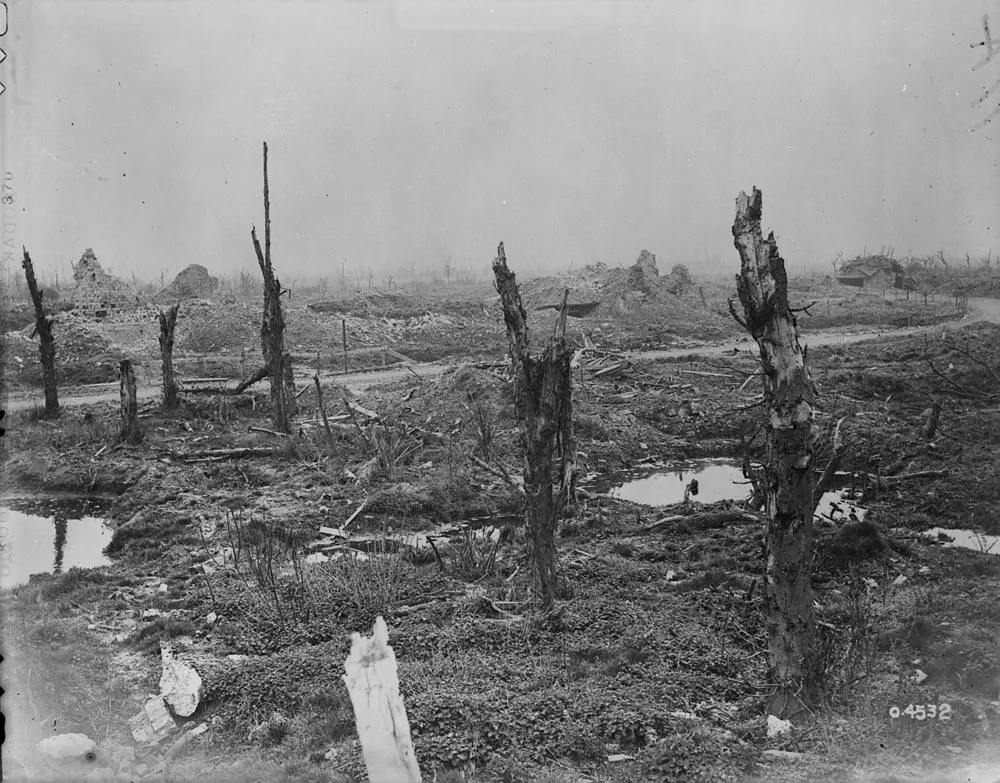
A shattered landscape of splintered tree trunks, flooded shell holes and the broken brick ruins of a village along a road.
The crossroads at Festubert, showing the ruins of the church and the dressing station, photographed April–May 1919. Courtesy Canada. Dept. of National Defence / Library and Archives Canada.Historical image · provenance and reproduction rights to be confirmed

SOURCES

Where this comes from

Every claim in this study is drawn from the works below. Where they disagree or fall silent, the text says so rather than choosing for them.

  1. 01Battle of Festubert 1915 V2.0 — research documentBrothers in Arms Memorial project (Srishti Foundation), supplied 2026
  2. 02Battle of Festubert 1915 — Pics & lettersBrothers in Arms Memorial project (Srishti Foundation), supplied 2026
  3. 03The Battle of FestubertThe Long, Long Trail
  4. 04Land Battles — FestubertCanada and the First World War, Canadian War Museum
  5. 05Festubert and Givenchy — Canada's First World War BattlesThe Vimy Foundation
  6. 06Festubert, 1915Government of Canada (Canada.ca)
  7. 07Festubert; Festubert memorial15th Battalion Canadian Expeditionary Force Memorial Project
  8. 08The Battle of FestubertCanadian History Ehx — source of the letters quoted above, drawn from newspapers and local histories
  9. 09Battle of FestubertThe Kenora Great War Project
  10. 10Photographs: Festubert crossroads 1919; German parapet near Festubert, 1915 (PA-005760)Department of National Defence / Library and Archives Canada
  11. 11British troops watching German prisoners at Festubert, May 1915 (Q 90283)Imperial War Museums