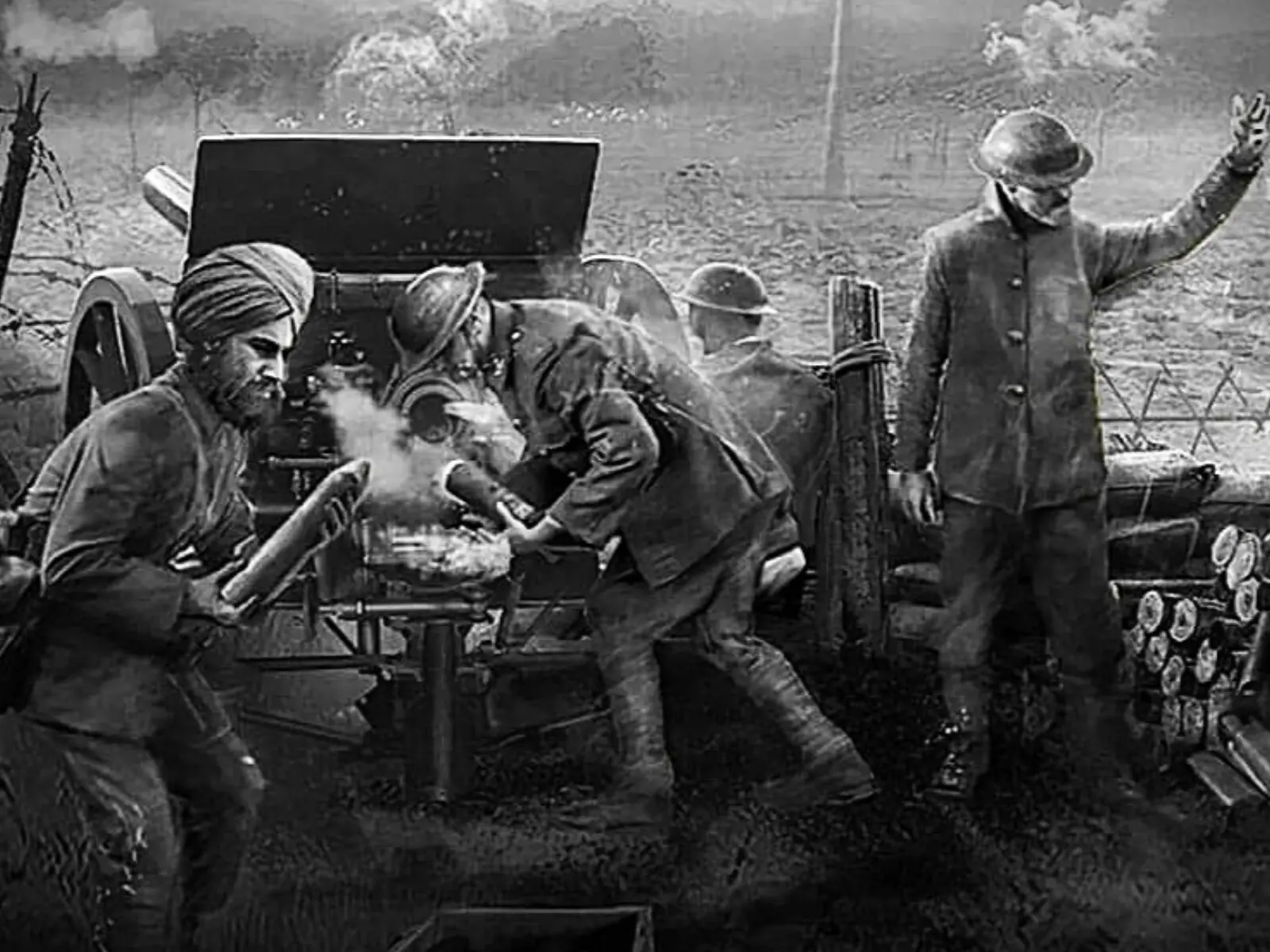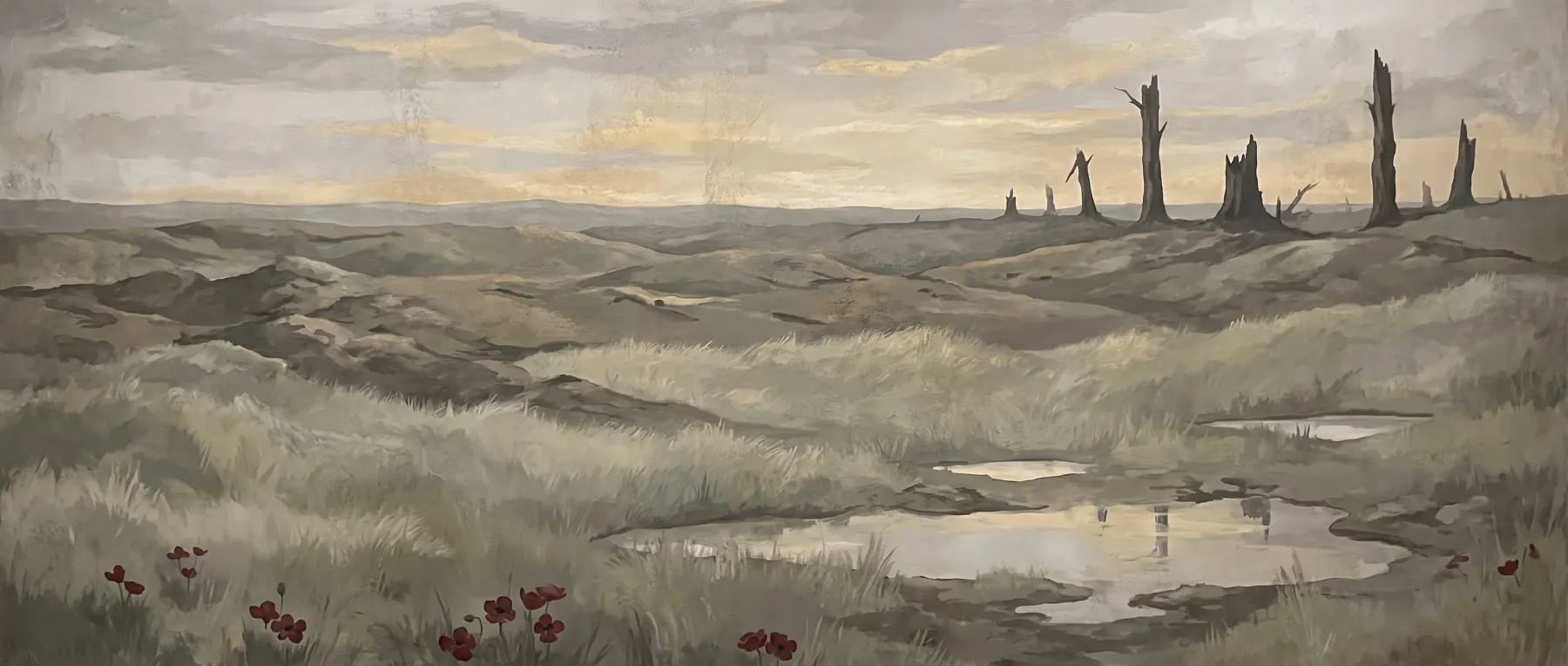
Shared History

The battles they shared

Indian and Canadian soldiers met the same war in the same places. These are the engagements where their service overlaps — set out in full, with every claim carrying its source.

3 IN-DEPTH STUDIES · 5 FURTHER ENGAGEMENTS

In depth

Three battles, told in full

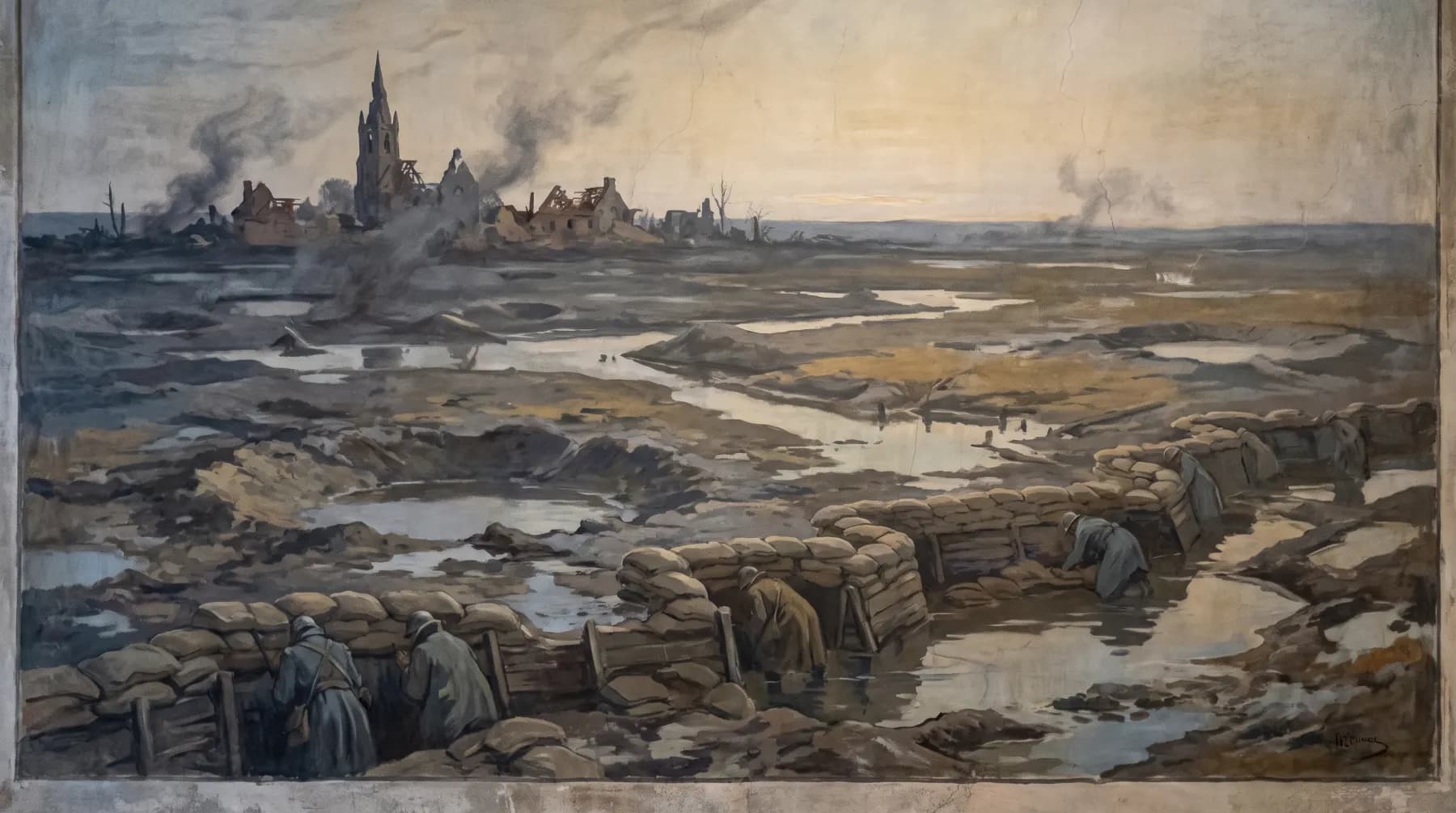
  • Painted reconstruction of flat waterlogged Flanders farmland at cold dawn, flooded shell holes reflecting a pale sky, with the ruined rooftops of Neuve Chapelle village low on the smoke-covered horizon.01

    10–13 March 1915

    The Battle of Neuve Chapelle

    The Indian Corps leads the first planned British offensive

    The first fully planned British offensive of the First World War, and the first in which Indian and Canadian troops fought in the same operation under the same command. The Indian Corps delivered the only true breakthrough; Canadian guns and rifles held German reserves away from it.

    Indians made the breakthrough, the British took the village, and Canadians ran the deception that protected the assault — three forces, one operation, in March 1915.

    • Indian formation: Indian Corps (Meerut Division)
    • Canadian role: Diversion and artillery
    • Guns in the barrage: 530, over 35 minutes
    Read the study7 sections · 6 sources
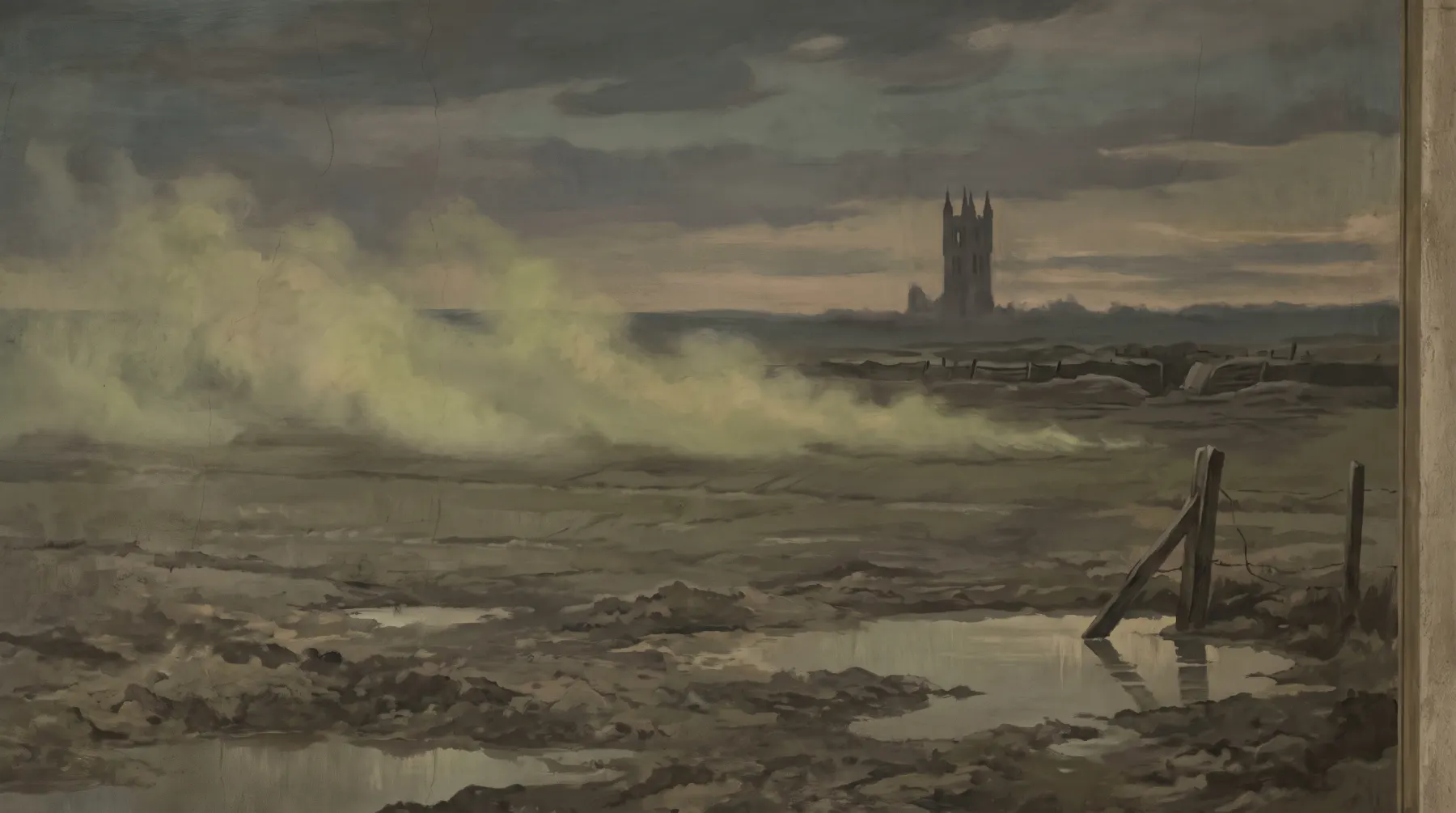
  • Painted reconstruction of a pale yellow-green chlorine gas cloud drifting across flat Flanders farmland at dusk, with the ruined tower of the Ypres Cloth Hall silhouetted on the horizon.02

    22 April – 25 May 1915

    The Second Battle of Ypres

    Gas, the Canadian stand, and the Lahore Division's costliest day

    The first large-scale use of chlorine gas on the Western Front. The 1st Canadian Division held the gap it tore open; the 3rd (Lahore) Division was rushed north and attacked toward Mauser Ridge, losing 3,889 men in eight days.

    Second Ypres is where the Canadian and Indian stories first meet at scale — Canadians containing the breach, Indian troops counter-attacking it, and Canadian guns firing for the Indian advance of 27 April.

    • Indian formation: 3rd (Lahore) Division
    • Canadian formation: 1st Canadian Division
    • Lahore Division losses: 3,889 — about 30%
    Read the study8 sections · 12 sources
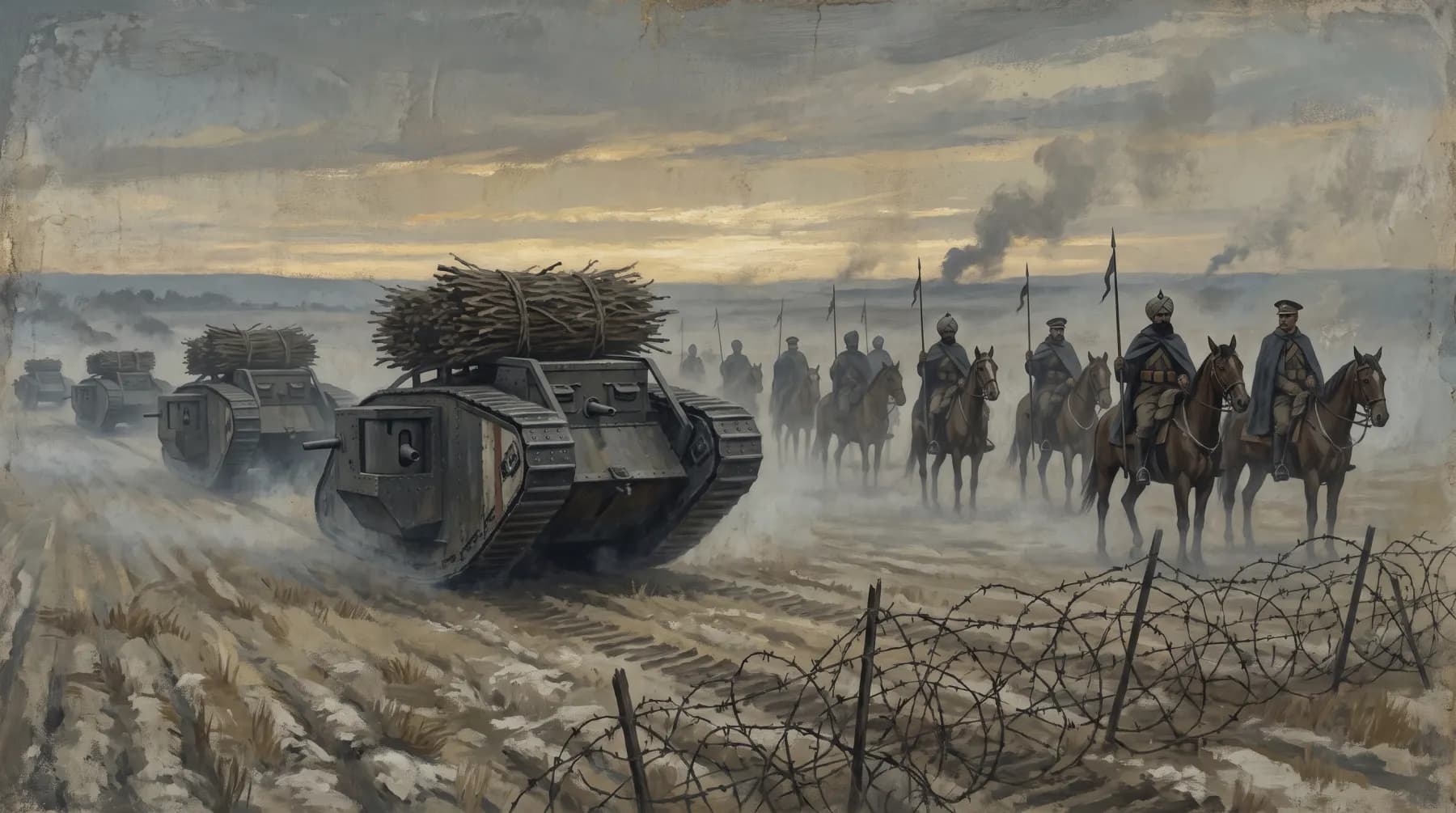
  • Painted reconstruction of Mark IV tanks carrying fascines advancing through dawn mist at Cambrai, with a column of mounted cavalry in turbans and peaked caps waiting behind a belt of barbed wire.03

    20 November – 7 December 1917

    The Battle of Cambrai

    Indian and Canadian cavalry in the first mass-tank offensive

    The first battle to commit massed tanks against a fortified trench system, and the clearest case of Indian and Canadian troops serving inside a single division. Canadian cavalry rode through the breach at Masnières; Indian cavalry stopped the German counter-offensive ten days later at Gauche Wood.

    At Cambrai, Indian and Canadian mounted troops shared one divisional commander, one operational plan and, in the end, one desperate defence — the most direct evidence of shared service that this memorial commemorates.

    • Indian formation: 5th Cavalry Division
    • Canadian formation: Canadian Cavalry Brigade
    • Tanks committed: More than 400
    Read the study9 sections · 17 sources

Also commemorated

Further engagements

Shorter entries for the other campaigns connected to this memorial. In-depth studies for these are in preparation.